

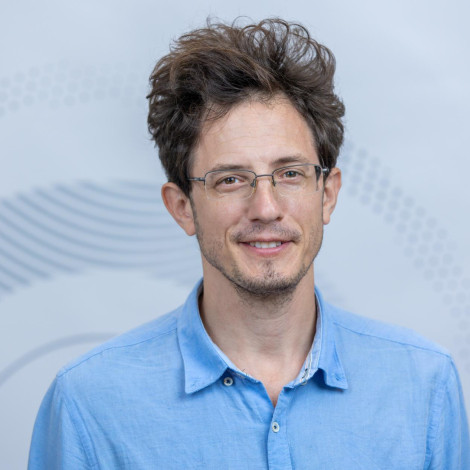
פרופ' עמרי אשר
קורות חיים
פרופ' עמרי אשר השלים שלוש התמחויות פוסט־דוקטורט, באוניברסיטת חיפה, באוניברסיטת בן־גוריון ובאוניברסיטת לוס אנג'לס בקליפורניה (UCLA), בטרם הצטרף לאוניברסיטת בר־אילן.
בעבודתו המחקרית בוחן פרופ' אשר כיצד התרגום חושף ומעצב יחסים מורכבים בין זהויות, תפיסות ורעיונות בתקופתנו, בשתי מסגרות עיקריות: היסטוריה תרבותית של יחסי מולדת ותפוצה בעולם היהודי במאה ה־20 ובמאה ה־21, בעיקר מבעד לפריזמה של התרגום הספרותי והתאולוגי; והקשרים חברתיים, אֶתיים ותאורטיים של תרגום מכונה, והשלכותיהם על תקשורת בין-תרבותית בעידן הדיגיטלי.
ספרו הראשון, Reading Israel, Reading America: The Politics of Translation between Jews, התפרסם ב-2019 בהוצאת אוניברסיטת סטנפורד. ספרו השני, Machine Translation and Translation Theory, התפרסם ב-2025 בהוצאת רוטלדג'.
לצד כתיבתו המחקרית תרגם פרופ' אשר ספרים אחדים, ובהם: מרפי מאת סמואל בקט (בהוצאת "הספרייה החדשה"); גלגולי לשון ובראי השפה מאת גיא דויטשר (בהוצאת "חרגול").
פרופ' אשר היה חבר בפורום צעירי מדעי הרוח והחברה באקדמיה הלאומית הישראלית למדעים (2021–2022) וזכה במענקי מחקר ובמלגות. ביניהן: מענק מחקר אישי מהקרן הלאומית למדע (ISF, 2021–2024); מענק הרקטור למחקר בין־תחומי (עם ד"ר אלה גליקסון), אוניברסיטת בר־אילן (2020–2022); מלגת מחקר מאת קרן ליסה ומיכאל לפל (Lisa and Michal Leffell Foundation, קיץ וסתו 2015); פרס הכט, מוסד הרצל לחקר הציונות, אוניברסיטת חיפה (2015), ועוד. הוא מכהן כיו"ר התחום ‘Jewish Languages and Linguistics from Antiquity to the Present’ בארגון ה-Association for Jewish Studies. כמו כן, זכה בפרס מרצה מצטיין, המוענק מטעם לשכת סגן הרקטור, לשנת הלימודים תשפ"ד (כנציג הפקולטה למדעי הרוח בסגל הבכיר).
קורסים
תרגום וזהות יהודית: מפגש ישראלי-אמריקני
תרגום - בין היסטוריה וזיכרון
סוגיות יסוד בתרגום: בין הצורני והחברתי
תרגום במאה ה-21
תרגום אקדמי
פירסומים
Books
Asscher, Omri (2025). Machine Translation and Translation Theory. Routledge.
Asscher, Omri (2019). Reading Israel, Reading America: The Politics of Translation between Jews. Stanford University Press.
Refereed articles in peer-reviewed journals
Asscher, Omri and Mirco Musolesi (under review; preprint). “The Relationship between Professional and General Ethics in Generative AI.” Ethics and Information Technology. preprint: http://arxiv.org/abs/2608.29306
Asscher, Omri (forthcoming). “The De-liberalization of Rabbi Jonathan Sacks in Hebrew Translation.” Jewish Quarterly Review.
Adler, Yael, and Omri Asscher (forthcoming). “The Status of Survivor Testimony among Yad Vashem Historians in the 1950s: The Unique Historiography of Nachman Blumental and Joseph Kermish.” Katedra. [in Hebrew] [equal contribution from both authors]
Asscher, Omri (2026). “The Case for Humanities-based Studies of AI Production and Effects.” AI & Society. https://doi.org/10.1007/s00146-026-03170-y
Asscher, Omri, Arif Ahmad, Ananya Agrawal, and Monojit Choudhury. (2026). “ETHICA-MT: Introducing a Framework and Dataset for Studying Ethical Orientations in LLM-based Machine Translation.” In Findings of the Association for Computational Linguistics: ACL 2026, pages 21825–21845, San Diego, California, United States. Association for Computational Linguistics. https://aclanthology.org/2026.findings-acl.1098/
Glikson, Ella, Asscher, Omri, and Raveh Harush (2026). “AI in Multilingual Organizational Communication: The Impact of Culturally Adapting Machine Translation on Global Leadership Self-Efficacy.” Cross Cultural & Strategic Management. https://doi.org/10.1108/CCSM-09-2024-0230 [equal contribution from both authors]
Meyer, Phyllis, and Omri Asscher (2026). “American Reform Translations of the Passover Haggadah: Shifting Approaches to the Sh'fokh Ḥamatkha Section, 1892-2021.” Modern Judaism. 46:2, 179-202, https://doi.org/10.1093/mj/kjag015 [equal contribution from both authors]
Carpuat, Marine, Omri Asscher, Kalika Bali, Luisa Bentivogli, Frédéric Blain, Lynne Bowker, Monojit Choudhury et al. (2025). “An Interdisciplinary Approach to Human-Centered Machine Translation.” EMNLP. https://arxiv.org/pdf/2506.13468
Asscher, Omri, and Michal Schuster (2024). “Language, Gender, and Refugee Migration: Tigrinya-speaking Asylum-seekers in Israel.” Israel Studies in Language and Society 18, 51-73. [equal contribution from both authors]
Glikson, Ella, and Omri Asscher (2023). “AI-mediated Apology in a Multilingual Work Context: Implications for Perceived Authenticity and Willingness to Forgive.” Computers in Human Behavior 40, 107592. https://doi.org/10.1016/j.chb.2022.107592
[equal contribution from both authors]
Asscher, Omri (2023). “The Position of Machine Translation in Translation Studies: A Definitional Approach.” Translation Spaces 12:2. https://doi.org/10.1075/ts.22035.ass
Asscher, Omri (2023). “Israeli Journalism in the Face of Moral-Political Criticism in the Works of Philip Roth and Saul Bellow.” Iyunim 38, 183-208. [in Hebrew] https://www.nli.org.il/he/articles/RAMBI997013725857905171/NLI
Asscher, Omri (2023). “The Decline in the Religious Zionist Negation of the Diaspora: A Translation Perspective.” Contemporary Jewry. https://doi.org/10.1007/s12397-022-09471-w
Asscher, Omri (2022). “Language Ideology in American Jewish Thought.” Religion 52:3, 384-408. https://doi.org/10.1080/0048721X.2021.1994481
Asscher, Omri (2022). “The Explanatory Power of Descriptive Translation Studies in the Machine Translation Era.” Perspectives: Studies in Translation Theory and Practice. https://doi.org/10.1080/0907676X.2022.2136005
Asscher, Omri and Ella Glikson (2021). “Human Evaluations of Machine Translation in an Ethically Charged Situation.” New Media & Society 25:5, 1087-1107. https://doi.org/10.1177/14614448211018833
[equal contribution from both authors]
Asscher, Omri (2021). “Translation as a Probe into Homeland-Diaspora Relations.” Translation Studies 14:1, 36-50. https://doi.org/10.1080/14781700.2020.1773307
Asscher, Omri (2021). “The American Oz: Notes on Translation and Reception.” Journal of Israeli History 38:2, 303-327. https://doi.org/10.1080/13531042.2020.1874674
Asscher, Omri and Ofer Shiff (2020). “Diasporic Stances, Homeland Prisms: Representing Diaspora in the Homeland as Internal Negotiation of National Identity.” Diaspora Studies 13:1, 1-15. https://doi.org/10.1080/09739572.2019.1685815
[equal contribution from both authors]
Asscher, Omri (2020). “The Ben-Gurion-Blaustein ‘Understanding’ as a Historiographical Yardstick.” Israel Studies 25:3, 33-48. https://doi.org/10.2979/israelstudies.25.3.05
Asscher, Omri (2020). “Exporting Political Theology to the Diaspora: Translating Rabbi Kook for Modern Orthodox Consumption.” Meta: Translators’ Journal 65:2, 292-311. https://doi.org/10.7202/1075837ar
Asscher, Omri (2018). “Jewish-American Literature Makes Aliyah? Jewish/non-Jewish Boundary Maintenance, and the Israeli Approach to the Diaspora.” Jewish Social Studies 23:3, 128-159. https://doi.org/10.2979/jewisocistud.23.3.05
Asscher, Omri (2018). “Israel for American Eyes: Literature on the Move, and the Mediated Repertoire of Jewish-American Identity.” AJS Review 42:1, 21-38. https://doi.org/10.1353/ajs.2021.0040
Asscher, Omri (2018). “’Judaism in Translation’: American Jewish Literature and Culture in Israeli Thought.” Israel 25, 109-137. [in Hebrew]
Asscher, Omri (2017). “A Case for an Integrated Approach to the Mediation of National Literature.” Translation and Interpreting Studies 12:1, 24-48. https://doi.org/10.1075/tis.12.1.02ass
Asscher, Omri (2016). “The Ideological Manipulation of Hebrew Literature in English Translation in the 1970s and 1980s.” Journal of Modern Jewish Studies 15:3, 384-401.
https://doi.org/10.1080/14725886.2016.1151196
Asscher, Omri (2014). “The Integration of Translated Hebrew Literature in America: The Pre-Zionist Phase.” Iyunim 24, 94-129. [in Hebrew]
https://in.bgu.ac.il/bgi/iyunim/24/Omri-Asscher.pdf
Asscher, Omri (2014). “An Anthology Editor as Israeli Ambassador to the U.S.: Ehud Ben-Ezer and Representing the Arab in Hebrew Literature to the American Reader.” Dappim: Research in Literature 19, 172-186. [in Hebrew]
https://www.jstor.org/stable/23986517
Asscher, Omri (2010). “A Model for Hebrew Translation of British Humor: Amplification and Overstatement.” Target: International Journal of Translation Studies 22:2, 237-263. https://doi.org/10.1075/target.22.2.04ass
Refereed articles in books
Asscher, Omri (2013). “The Augmentation Model in the Hebrew Translation of British Humor,” in Ha-Ivrit Safa Xaya [Hebrew as a living language], edited by Rina Ben-Shachar and Nitsa Ben-Ari, Volume VI, 43-61. [in Hebrew]
Other publications [non-refereed]
Asscher, Omri (2026). “The Implications of Machine Translation for Translation Theory: Looking Inward and Outward.” In European Society for Translation Studies Newsletter 68 (Vienna, May 2026), 8-9.
Asscher, Omri (2024). “A Translation Hypothesis for the Development of Migrant Communities into Enduring Diasporas.” In Routledge Handbook of Translation and Migration, edited by Brigid Maher, Loredana Polezzi and Rita Wilson. London and New York: Routledge, 42-55.
Asscher, Omri (2024). Review of Reuven Gafni’s “Hebraizing Sherlock Holmes”. Journal of Israeli History 42:1–2, 155–157. https://doi.org/10.1080/13531042.2024.2402600.
Asscher, Omri (2021). “On two inherent ambiguities in Samuel Beckett’s Murphy.” https://www.newlibrary.co.il/page_18548 [in Hebrew]
Asscher, Omri (2013). Review of Michael Weingrad’s “American Hebrew Literature: Writing Jewish National Identity in the United-States”. Studies in American Jewish Literature 32:2, 218-221. https://doi.org/10.5325/studamerjewilite.32.2.0218
Other publications: translations (selected)
books
Murphy by Samuel Beckett, Tel Aviv: The New Library (with my annotation), 2020.
Thinking in Tongues by Guy Deutscher, Tel Aviv: Xargol-Am Oved, 2011.
The Unfolding of Language by Guy Deutscher, Tel Aviv: Xargol-Am Oved, 2007.
Game Theory: A Very Short Introduction by Ken Binmore, Tel Aviv: Aliyat Hagag-Yediot Sefarim.
Articles and essays
“On the Latest Execution” by Charles Dickens, Haaretz, February 2026.
"The Separation of Powers" by Thomas Jefferson, Haaretz, April 2025.
“My Israel Story: An Interim Report on a Winding Journey” by David N. Myers, in Kavim Li-dmutenu, Ben-Gurion Publishing Institute, 2020.
“Getting Up on Cold Mornings” by James Henry Leigh Hunt, in Dehak, 6, February 2016.
“Dissecting the Qumran-Essene Hypothesis,” by Edna Ullmann-Margalit, in Odyssey 4, June 2009.
התמחות
מחקריו של פרופ' אשר מאירים את הלכי הרוח הנבדלים במרכזים היהודיים בישראל ובאמריקה, המשתתפים בעיצובן של זהויות תרבותיות מִתחרות, ולא פעם מנוגדות. בשנים האחרונות הוא מתמקד במפגש האינטלקטואלי בין הציונות הדתית בארץ לאורתודוכסיה המודרנית בארצות הברית. הפרויקט, הנערך בחסות מענק מחקר אישי מהקרן הלאומית למדע (ISF, 2021–2024), בוחן את מאפייניהם הסוציולוגיים והרעיוניים של התרגומים בין הקהילות היהודיות, את תפקידם בתרבות המייצאת והשתלבותם בתרבות הקולטת ואת השינויים שהם משקפים בעיצוב המחשבה הדתית בשני המרכזים.
מחקרו של פרופ' אשר גם עוסק בכלי התרגום הבולט במאה ה־21, תרגום מכונה, מתוך הבנה שאין להתעלם מתפקידו כאמצעי לתקשורת בין תרבויות ובין יחידים בתקופתנו. הוא מתמקד בהקשרים אֶתיים של תרגום מכונה, בפרט בשימוש בו בהקשרים של יחסי כוח; ולצד זאת, בהקשרים תאורטיים של תרגום מכונה, בפרט בהערכה מחודשת של תאוריות של תרגום אנושי לנוכח עלייתה של הבינה המלאכותית. אחדים ממאמריו מבקשים להבין את ההשלכות והתפיסות של השימוש בתרגום מכונה בימינו, בפרט בנסיבות הגירה טעונות או בסביבות עבודה רב־לשוניות. עבודות אלו, שנכתבו בשותפות עם ד"ר אלה גליקסון, זכו לעניין ונסקרו בהארץ, בדה מרקר וב־ABC News.
בימי המלחמה שלאחר 7 באוקטובר 2023, השתתף פרופ' אשר, לצד מרצים נוספים במחלקה, בהקמתו ובקידומו של מוקד תרגום לאומי למצבי חירום, המספק שירותי תרגום בעל־פה בזמן אמת למוסדות, לארגונים חברתיים ולשירותים הציבוריים. זאת, במאמץ לתת מענה מיידי לצרכים רפואיים, נפשיים ולוגיסטיים, שעלו בהיקפים חסרי תקדים לאחר 7 באוקטובר. המוקד, שהמתורגמנים לשפות השונות עבדו בו בהתנדבות, פעל מול מטה החטופים והנעדרים, משרד הבריאות, משרד המשפטים, ביטוח לאומי וגורמים אחרים.
תחומי עניין
תרגום וזהות יהודית
תרגום ספרותי
תרגום של תיאולוגיה
תרגום בעידן הדיגיטלי
תפיסות אנושיות של תרגום מכונה
תרגום מכונה ותיאוריוֹת של תרגום
תרגום ואידיאולוגיה
תרגום והיסטוריה
מגעים בין התרבות הישראלית והתרבות היהודית-אמריקנית
תאריך עדכון אחרון : 13/10/2026