

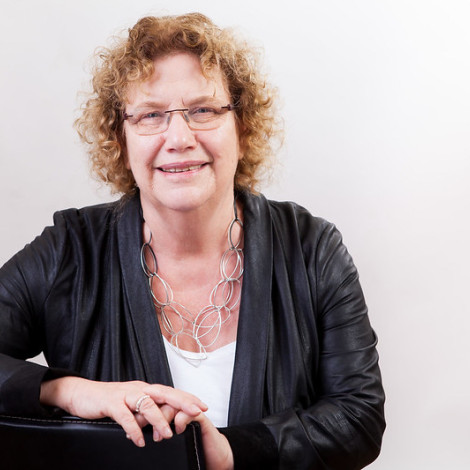
Professor Emeritus Elda Weizman
CV
Education
B.A. 1969-1972 . English language, French culture, The Hebrew University of Jerusalem
M.A. 1972-1974. French Linguistics, The Hebrew University of Jerusalem
Diploma. 1972-1974. French-Hebrew Translation. The Hebrew University of Jerusalem
Ph.D. 1976- 1982. Discourse Characteristics of Journalistic Language in French and Hebrew, and Implications for Translation: Utterances in Quotation Marks (in Hebrew). Advisors: Profs. C. Rabin, S.Blum-Kulka.
Professional positions
Head, Bar-Ilan Unit of Interdisciplinary Studies;
President of the Israel Association of Applied Linguistics;
Associate editor, Topics in Humor Research series, John Benjamins;
Associate editor, Pragmatics;
Member of the advisory board, Dialogue Studies series, John Benjamins;
Member of the advisory board, The Israeli Journal of Humor Studies: An International Journal;
Member of the editorial board, Internet Pragmatics, John Benjamins;
Member of the advisory board, Language and Dialogue series, John Benjamins;
Member of the editorial board, Balshanut Ivrit [Hebrew Linguistics, in Hebrew];
Member of the editorial board, Helkat Lashon (in Hebrew);
Member of the academic board, Kaye College of Education.
Previously Chair, Department of Translation and Interpreting Studies: 1991-1998, 2001-2003, 2007-2011
Referee
Applied Linguistics; Pragmatics and Cognition; Journal of Pragmatics; Pragmatics; Target; Interpreting; Discourse Studies; The Israeli Journal of Humor Studies: An International Journal; Language Sciences, Helkat Lashon: A Journal for Theoretical and Applied Linguistics (in Hebrew), Blashanut Ivrit [=Hebrew Linguistics] (in Hebrew)); Israel Studies in Language and Society
Educational activities
Co-author of the Language and Communications program, Haifa University, approved by the Ministry of Education (1985); Academic consultant for the teaching of translation at high-school (1996-1998), advisor for Rosenbluth, P. and N. Ballas, Two-Way Traffic: Translation, Ministry of Education, Culture and Sport, Division of Curriculum Development, 1998; Academic consultant of: Sara Lipkin, Mila Tova, (=A Nice Word), textbook for the teaching of Hebrew at high-school), The Centre for Educational Technology, 2008.
Research Grants
|
Research topic |
Granting Agency |
Dates |
|
The construction of ordinariness in mediated public talk: Accountability of communicative action and the private-public interface. 200, 000 euros. With Anita Fetzer |
German-Israel Foundation (GIF) |
January 2019 – December 2021 |
|
ESF Workshop: Follow-ups in Political Discourse, 12200 euros |
European Science Foundation |
April 2012 |
|
Conveying irony and reservations through discursive redundancy, 10000 Shekels |
Rector's grant |
2011 |
|
Self-advocacy in students with reading disabilities: a socio-pragmatic study of discourse patterns in unequal power relations, &276000 |
Israel Science Foundation, Israel Academy of Sciences and Humanities |
2007-2009 |
|
Discourse patterns in news interviews on Israel television, $34900 |
Israel Science Foundation, Israel Academy of Sciences and Humanities |
1991-1993 |
|
Speech Acts in Australian English, Canadian French and Israeli Hebrew, 20000 shekel |
The Institute for Canadian Studies, The Hebrew University, Jerusalem |
1986-1987 |
Research students (MA theses, Ph.D dissertations)
|
Thesis Title |
Student Name |
|
Linguistic irony in dialogue in the novel Pride and Prejudice by Jane Austen: comparison between the original text and the Hebrew translation |
Arad Yulia. M.A. |
|
My Michael by Amos Oz: Face as a Key Element in the Discourse of Hannah and Michael. A comparison of Source vs. Translation |
Ben Ari Zohar. M.A. |
|
The Curious Incident of the Dog in the Night-Time": Pragmatic Uniquness of the Protagonist's Speech – Comparison of the Sourse vs. Translation |
Ben David Mor. M.A. |
|
The Translation of Irony in Catch-22 |
Hirsh Galia. M.A. |
|
Cultural variation in interviewing styles: challenge and support in El-Jazira and on Israeli television |
Levy Irit M.A. |
|
Kate' Keller's Management of Face and Power in All My Sons by Arthur Miller. Comparison of Source vs. Translation |
Salton Nadia. M.A. |
|
Textual Analysis of Humor and Irony in Jerome K.Jerome's Three Men in a Boat: Comparing the source and its Translations into Hebrew |
Friedman-Cedar Tali. M.A.
|
|
Election discourse on Israeli TV (May 1996): Building emotive connotations through the use of textual links |
Shukrun, Pnina. M.A. |
|
Irony and stream of consciousness in literary translation |
Zioni Smadar. M.A. |
|
Terms of Address in the second-person singular and their translation from French into Hebrew subtitles in two movies: “Entre les Murs” (The Class) and “La journée de la jupe” (Skirt Day) |
Marlene Chimoni. M.A. |
|
Discourse patterns of irony and reservations in online Spanish and Hebrew op-eds |
Veronica Zilberstein, M.A. |
|
Interference of the Arabic Language in Two Novels: Anton Shammas' Arabesques, Originally Written in Hebrew, and Emile Habibi's The Pessoptimist, translated by Anton Shammas from Arabic into Hebrew. |
Siham Wakid, M.A. co-advisor: R Weissbrod. |
|
Irony in on-line readers' comments on op-eds. |
Hila Atkin.M.A |
|
The Medieval "French" Jewish Exegesis as a |
Garzon, Jacob. [co-advisor: Ephraim Meir]. Ph.D. |
|
Between Irony and Humor: A pragmatic model based on textual analysis of Literary works and their translation. |
Hirsh Galia. Ph.D. |
|
Intertextuality in the election discourse on Israeli TV: Linguistic features and rhetorical functions |
Pnina Shukrun-Nagar, Ph.D. |
|
Verbal Irony in Dialogue in Jane Austen's Pride and Prejudice and in Its Adaptations for Film and Television: A Pragmatic Comparison of Source and Transfer |
Arad Yulia. Ph.D. co-advisor: R. Weissbrod |
|
Constructing Interviewers' Control and Involvement In Radio News Interviews |
Aliza Amir. Ph.D. |
|
Positioning through the Interaction between Humor and Irony to Image and Politeness in Source and Target Texts: Helen Fielding's Bridget Jones Books as a Case Study |
Tali Cedar.Ph.D |
|
Powerful women in 19th –century British literature |
Nurit Kedem, Ph.D (in process) |
|
Interactivity of Ironic in Readers' Comments to On-Line Op-Eds. in Haaretz' Website and Facebook Page: Ripples, Threads and Branching Out |
Hila Atkin, Ph.D (in process) |
Research
- Current research project: Irony in on-line journalistic commenting: a corpus-based study of cultural variation.
- Challenge in news interviews and in public discourse..
- The pragmatics of traslation.
- the given-new continuum in prosody and in literary discourse.
- terms of address: cultural variation in the tu/vous distinction
Courses
Translation: a pragmatic approach
Indirectness in discourse: a cross-cultural perspective and implications for translation
Discourse and power:a cross-cultural perspective and implications for translation
Indirectness and politeness: a cross-cutural perspective and implications for translation
irony and humour: a cross-cultural perspective and implications for translation
Publications
List of publications
Jan. 2023
Elda Weizman
https://orcid.org/0000-0001-9068-9945
Books
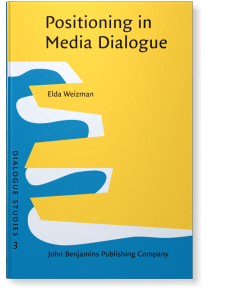
Weizman, E. 2008. Positioning in Media Dialogue: The Case of News Interviews on Israeli Television, Amsterdam/Phildaelphia John Benjamins. https://doi.org/10.1075/ds.3
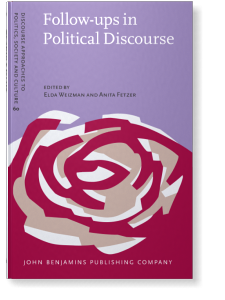
Weizman, Elda and Anita Fetzer (eds.), 2015. Follow-Ups in Political Discourse: Explorations Across Contexts and Discourse Domains. Amsterdam/Phildaelphia: Benjamins. https://doi.org/10.1075/dapsac.60
Fetzer, Anita, Elda Weizman and Lawrence Berlin (eds.), 2015. The Dynamics of Political Discourse: Forms and Functions of Follow-Ups. Amsterdam/Philadelphia: Benjamins. https://doi.org/10.1075/pbns.259
Fetzer, Anita and Elda Weizman (eds.), 2019. The Construction of Ordinariness in Media Genres. Amsterdam: Benjamins. https://doi.org/10.1075/pbns.307
Editing, special issues in refereed journals
Blum Kulka, S. and E. Weizman (eds.), 2002. Children Talk: Discourse Literacy in Colloquial Language, SCRIPT 3-4 (special issue, in Hebrew).
Fetzer, A. and E. Weizman (eds.), 2006. Pragmatic Aspects of Political Discourse in the Media, Journal of Pragmatics 38 (special issue).
Weizman, E. (ed.), 2006. Rôles et Identités dans le Discours Conflictuel. Questions de Communication 9, pp. 7-150 (dossier coordonné et commenté par E. Weizman).
Weizman, E. and Z. Livnat (eds.), 2009. Perspectives in the Study of Spoken Hebrew. Hebrew Linguistics 62-63 (special issue, in Hebrew).
Weizman, E. and A. Fetzer (eds.), 2011. The Rhetoric of Redundancies. Language Sciences 33 (special issue).
Fetzer, A., E. Weizman and E. Reber (eds.), 2012. Follow-ups Across Discourse domains: a cross-cultural exploration of their forms and functions. Proceedings of an ESF strategic workshop, Wuerzburg, 30.5-2.6 2012. http://opus.bibliothek.uni-wuerzburg.de/volltexte/2012/7165/
Weizman, E. and Z. Livnat. Forthcoming 2022. Dialogicity in Political Discourse. Pragmatics and Society 13(5).
Refereed papers and chapters
Weizman, E. 1980. Comparative Hebrew-French grammar. Orchot 11, 44-70. (in Hebrew)
Weizman, E. 1982. Information processing in journalistic language. In: Blum- Kulka, S., Y. Tobin and R. Nir (eds.), Studies in Discourse Analysis. Jerusalem: Academon, 117-146. (in Hebrew)
Weizman, E. 1984. Some register characteristics of discourse structure in journalisitic language. Applied Linguistics V/1, 39-50.
Weizman, E. 1984. Identifying implied referents: Textual and pragmatic factors in information processing. Applied Linguistics V/3, 264-274.
Weizman, E. 1985. Towards an analysis of opaque utterances: Hints as a request strategy. Theoretical Linguistics 12, No. 2/3, 153-163. https://doi.org/10.1515/thli.1985.12.2-3.153
Weizman, E. 1986. An interlingual study of discourse structures: Implications for the theory of translation. In: House, J. and S. Blum-Kulka (eds.), Interlingual and Intercultural Communication: Discourse and Cognition in Translation, Tubingen: Gunter Narr, 115-126.
Weizman, E. and S. Blum-Kulka. 1987. Identifying and interpreting translated texts: On the role of pragmatic adjustment. Indian Journal of Applied Linguistics XIII, No. 2, 61-74.
Dascal, M. and E. Weizman. 1987. Contextual exploitation of interpretation clues in text understanding: An integrated approach. In: Verschueren, M.J. and M. Bertuccelli- Papi (eds.), The Pragmatic Perspective, Amsterdam: John Benjamins, 31-46.
Blum-Kulka, S. and E. Weizman. 1988. The inevitability of misunderstanding. Text 8 (3hh), 219-241. https://doi.org/10.1515/text.1.1988.8.3.219
Weizman, E. 1989. Requestive hints. In: Blum-Kulka, S., J. House & G. Kasper (eds.), Cross-Cultural Pragmatics: Requests and Apologies, New Jersey: Ablex, 71-95.
Dascal, M. and E. Weizman. 1990. Speaker’s meaning in literary texts. Hebrew Linguistics 28-30, 9-19. (in Hebrew)
Weizman, E. and M. Dascal. 1991. On clues and cues: Strategies of text understanding. Journal of Literary Semantics, XX/1, 18-30.
https://doi.org/10.1515/jlse.1991.20.1.18
Weizman, E. and S.Blum- Kulka. 1992. Ordinary misundersanding. In: Stamenov, M. (ed.),Current Advances in Semantic Theory, Amsterdam: John Benjamins, 419-434. https://doi.org/10.1075/cilt.73.34wei
Weizman, E. 1993. Interlanguage requestive hints. In: Blum- Kulka, S. & G. Kasper (eds.), Interlanguage Pragmatics, Oxford: Oxford University Press, 123-137.
Weizman, E. 1996. Shifting roles: A challenge strategy in news interviews on Israeli television. In: Schwarzwald, O. and Y. Shlesinger (eds.), Hadassa Kantor Jubilee Book, Ramat Gan: Language Research Papers, 85-95. (in Hebrew)
Weizman, E. 1997. Journalistic discourse in modern Hebrew: Saturated
environments. In: Bentolila, Y. (ed.), Shay la’Hadassa: Research in the Hebrew Language and in Judaic Languages, Beer Sheva: Ben Gurion University, 211-227. (in Hebrew)
Weizman, E. 1998. True or false? Direct speech in the daily press. Hebrew Linguistics 43, Mars 1998, 29-42. (in Hebrew)
Weizman, E. 1998. Individual intentions and collective purpose: The case of news interviews. In: Cmejrkova,S., J. Hoffmanova, O. Mullerova and J. Svetla (eds.) Dialogue Analysis VI, Tubingen: Max Niemeyer Verlag, 269-280.
Kozminsky, E, E. Weizman and H. Horowitz. 1998. Teaching translation in Israeli highschools. Meta 43:1, 119-129. https://doi.org/10.7202/003349ar
Weizman, E. 1999. Building true understanding via apparent miscommunication. Journal of Pragmatics 31, 837-846. https://doi.org/10.1016/S0378-2166(96)00057-4
Weizman, E. 1999. Discourse patterns in news interviews on Israeli television. In: Toury, G. and R. Ben Shachar (eds.), Hebrew: A Living Language 2, Haifa: Haifa University, 135-156. (in Hebrew)
Weizman, E. 2000. Irony in news discourse. In: Rodrigue-Schwarzwald, O., S. Blum-Kulka and E. Olshtain (eds.), Raphael Nir jubilee Book: Studies in Communication, Linguistics and Language Teaching, Jerusalem: Carmel. 237-248. (in Hebrew)
Weizman, E. 2000. A Pragmatic study of the given-new discourse structure in Aharon Meged’s Novel Haxay AL Hamet. Helkat Lashon: Studies in Theoretical and Applied Lingustics 29-32, 19-39. (in Hebrew)
Weizman, E. 2001. Addresser, addressee and target: Negotiating roles through ironic criticism. In: Weigand, E. and M. Dascal (eds.), Negotiation and Power in Dialogic Interaction, Amsterdam: Benjamins, 125-137. https://doi.org/10.1075/cilt.214.11wei
Weizman, E. 2002. Interpretative support: On the role of co-text in the interpretation of indirectness. Hebrew linguistics 50-51, 37-49. (in Hebrew)
Weizman, E. 2003. News interviews on Israeli television: Normative expectations and discourse norms. In: Stati, S. and M. Bondi (eds.), Dialogue Analysis 2000, Tübingen: Niemeyer, 383-394. https://doi.org/10.1515/9783110933253.383
Blum Kulka, S. and E. Weizman. 2003. Misunderstanding in political interviews. In: House, J., G. Kasper and S. Ross (eds.), Misunderstanding in Social Life. Discourse Approaches to Problematic Talk, London: Pearson, 107-128.
Weizman, E. 2003. What was Hirschl dreaming about? A pragmatic study of a single conversation from Agnon’s Sipur Pashut in Hebrew and its English translation. In: Halevy, Y. and D. Sivan (eds.), Yaakov Bentolila Jubillee Volume, Beer Sheva: Ben Gurion University Press, 177-190. (in Hebrew)
Weizman, E. 2004. A Pragmatic study of N. Sarraute’s Pour un oui ou pour un non. In: Naaman-Zauderer, N. et al. (eds), Sig Vasiach: A Multi-faceted Philosophy, Tel Aviv: Mifalim Universitayim, 183-201. (in Hebrew)
Levy, Irit, E. Weizman and Y. Schneeibaum. 2004. Cultural variation in interviewing styles: News interviews in Hebrew and Arabic. In: Shlesinger, Y. and M. Muschnik (eds), Studies in Modern Hebrew, Jeruslaem: Tzivonim, 152-167. (in Hebrew)
Weizman, E. 2004. Interpreting emotions in literary dialogue. In: Weigand, E. (ed.), Emotion in Dialogic Interaction, Amsterdam/Philadelphia: John Benjamins, 241-254. https://doi.org/10.1075/cilt.248.16wei
Weizman, E. and N. Shelef, 2004. Le Champ sémantique de la vieillesse en Hébreu . In: Montandon, Alain (ed.), Les Mots du Vieillir, Presses Universitaires Blaise Pascal, Centre de Recherches sur les Littératures Modernes et Contemporains, 55-67.
Weizman, E. 2005. Allusions and quotations as translation problems. In: Frank, Armin Paul, N. Greiner, T. Hermans, H. Kittel, W. Koller, J. Lambert and F. Paul (eds). An International Encyclopedia of Translation Studies, Berlin/New York: Walter de Gruyter, Volume 1, 587-592. https://doi.org/10.1515/9783110137088.1.6.587
Hirsch, G. and E. Weizman. 2005. On the Interpretation of irony and its translation: Catch 22 by Joseph Heller as a case in point. In: Livnat, Z. and T. Wolf-Monzon (eds.), Criticism and Interpretation 38, 197-218. (in Hebrew)
Weizman, E. and M. Dascal. 2005. Interpreting speaker’s meaning in literary dialogue. In: Betten, A. and M. Dannerer, (eds.), Dialogue Analysis IX. Dialogue in Literature and the Media. Selected Papers from the 9th IADA Conference, Salzburg 2003 – Part I: Literature, Tübingen: Niemeyer, 61-72 https://doi.org/10.1515/9783110946062.61
Weizman, E. 2006. Roles and identities in news interviews: The Israeli context. Journal of Pragmatics 38, 154-179. https://doi.org/10.1016/j.pragma.2005.06.018
Fetzer, A. and E.Weizman, 2006. Political discourse as mediated and public discourse. Journal of Pragmatics 38, 143-153 (Special Issue: Pragmatic Aspects of Political Discourse in the Media). https://doi.org/10.1016/j.pragma.2005.06.014
Shlesinger, M., E. Weizman and F. Kaufmann. 2006. The department of translation and interpreting studies: From professional training to an academic discipline. In: Schwartz, D. (ed.), Bar-Ilan University: From Concept to Enterprise. Vol. 1: Milestones and History of Departments, Ramat Gan: Bar Ilan University Press, 449-462. (in Hebrew)
Weizman, E. 2006. Positionnement par le défi: Les Négociations des rôles dans l’interview télévisée. Questions de Communication 9, 135-149. https://doi.org/10.4000/questionsdecommunication.7926
Weizman, E. 2006. Roles et identitiés dans les interactions conflictuelles. Questions de Communication 9, 7-13.
French: https://doi.org/10.4000/questionsdecommunication.7919
English:https://doi.org/10.4000/questionsdecommunication.8864
Levi, I., E. Weizman et I. Schneebaum, 2006. Soutien et défi : une pour une étude comparée des interviews télévisées sur Al-Jazira et à la télévision israélienne. Questions de Communication 9, 73-94. https://doi.org/10.4000/questionsdecommunication.7923
Weizman, E., I. Levi and I. Schneebaum. 2007. Variation in interviewing styles: Challenge and support in Al-Jazeera and on Israeli television. In: Fetzer, A. and G. Lauerbach (eds.), Political Discourse in the Media, Amsterdam/Philadelphia: Benjamins, 197-223. DOI:10.1075/pbns.160.11wei
Weizman, E. 2007. Quantity scales: Towards culture-specific profiles of discourse norms. In: Grein, M. and E. Weigand (eds.), Dialogue and Culture, Amsterdam/Philadelphia: Benjamins, 141-152. https://doi.org/10.1075/ds.1.10wei
Weizman, E. 2009. ‘Friend and enemy’: A complex network of positioning strategies. Balshanut Ivrit (Hebrew Linguistics) 62-63, 299-322. (in Hebrew)
French translation: Weizman, E. 2014. « Ami et ennemi, frère et déserteur » : une grille de positionnements complexes. Argumentation et Analyse du Discours, 12. https://doi.org/10.4000/aad.1712
Kozminsky, L. and E. Weizman, 2009. Towards an examination of self advocacy discourse patterns in context.Israel Studies in Language and Society 2 (2) (on-line journal). (in Hebrew)
Weizman, E. 2010. Voids revisited: An issue in translation studies and its implications for the study of the Hebrew language. In: Ben Shachar, R., G. Toury and N. Ben-Ari (eds.), Ha’ivrit Safa Xaya (Hebrew: A Living Language) 5, Tel-Aviv: Hakibbuts Hameuchad and the Porter Institute, Tel-Aviv University, 201-217. (in Hebrew)
Weizman, E. 2011. Conveying indirect reservations through discursive redundancy. Language Sciences 33, 295-304. https://doi.org/10.1016/j.langsci.2010.10.006
Weizman, E. 2011-2012. Positioning in context: A scale of directness. Xelkat Lashon 43-44, 331-345. (in Hebrew)
Weizman, E. 2012. Towards a pragmatic reading of Bible interpretation. In: Hamo. M., M. Blondheim and T. Liebes (eds.), Communication as Discourse: Studies in Language and Media, Jerusalem: Magness, 56-75. (in Hebrew)
Weizman, E. 2012. Negotiating irony through follow-ups: Readers' comments on op-eds in the daily press. In: Fetzer, A., E. Weizman and E. Reber (eds.), Follow-ups across discourse domains: a cross-cultural exploration of their forms and functions, Proceedings of an ESF strategic workshop, Wuerzburg, 30.5-2.6 2012. http://opus.bibliothek.uni-wuerzburg.de/volltexte/2012/7165/, 263-274.
Weizman, E. 2012. Irony in news interviews: Dialogism and intertexuality. Slovo a Slovesnost, special issue: Intertexuality, Polyphony, Heteroglossia. Svetla Cmejrková & Jana Hoffmannová (eds.), 253-262.
Weizman, E. and L.Kozminsky. 2012. Dialogic dimensions of self-advocacy in unequal power relations: Students with reading disabilities as a case in point. In: Cantarini, Sibilla (ed.), Dialogue: State of the Art. Studies in memory of Sorin Stati, series LINCOM: Studies in Pragmatics 22, München: LINCOM EUROPA, 204-217.
Weizman, E. 2012. A pragmatic exploration of text-based given/new relations. In: Muchnik, Malcah and Tsvi Sadan (eds.), Studies in Modern Hebrew and Jewish Languages Presented to Ora (Rodrigue) Schwarzwald, Jerusalem: Carmel, 245-258. (in Hebrew)
Weizman, E. 2013. Political irony: Constructing reciprocal positioning in the news interview. In: Fetzer, A. (ed.), The Pragmatics of Political
Discourse: Explorations across Cultures, Amsterdam: Benjamins, 167-190. https://doi.org/10.1075/pbns.228.09wei
Weizman, E. 2013 . News interviews. Encyclopedia of Hebrew Language and Linguistics. Leiden: Brill, vol II, 825-828.
Weizman, Elda. 2015. Irony in and through follow-ups: talk and meta-talk in online commenting. In: Fetzer, Anita, Elda Weizman and Lawrence Berlin (eds.), The Dynamics of Political Discourse, Amsterdam/Philadelphia: Benjamins. 173-194. https://doi.org/10.1075/pbns.259.07wei
Berlin, L., E. Weizman and A. Fetzer. 2015. Introduction. In: Fetzer, Anita, Elda Weizman and Lawrence Berlin (eds.), The Dynamics of Political Discourse, Amsterdam/Philadelphia: Benjamins. 1-14. https://doi.org/10.1075/pbns.259.001int
Fetzer, A and E. Weizman. 2015. Following up across contexts and discourse domains. In: Weizman, Elda and Anita Fetzer (eds.), Follow-Ups in Political Discourse: Explorations Across Contexts and Discourse Domains. Amsterdam/Phildaelphia: Benjamins. IX-XIX. https://doi.org/10.1075/dapsac.60.001int
Yatsiv-Malibert, I. and E. Weizman, 2016. Prosodic features of the given/ new continuum in spoken Hebrew. Te’uda XXVII: Studies in Spoken Hebrew, ed. Einat Gonen, Tel-Aviv University, 437-452. (in Hebrew)
Yatsiv-Malibert, I. and E. Weizman, 2016. Exploring the prosodic and pragmatic interface of the given/new continuum: alternating repetitions as case in point. In: Ben Shahar, R. and N.Ben Ari (eds.), Ha’ivrit Safa Xaya (Hebrew: A Living Language) 7, Tel-Aviv: Hakibbuts Hameuchad and the Porter Institute, Tel-Aviv University, 177-201. (in Hebrew)
Weizman, E, 2016. Ironic commenting on op-eds: obstructing discussion. Israel Studies in Language and Society, 9(1-2), 184-208. (in Hebrew)
Weizman, E. and G. Dori-Hacohen. 2017. Commenting on opinion editorials in on-line journals: A cross-cultural examination of face-work in the Washington Post (USA) and NRG (ISRAEL). Discourse, Context & Media 19, 39-48. http://dx.doi.org/10.1016/j.dcm.2017.02.001 2211-6958/_ 2017
Glick (Ben-David), M. and E.Weizman. 2017. Translating impairement-specific / disability dependent discourse patterns: The translation of Mark Haddon’s The Curious Incident of the Dog in the Night-Time into Hebrew. Ha’ivrit 63: 3-4, 106-117 (in Hebrew)
Weizman, E., L. Kozminsky and T. Hornik-Lurie, 2017. Students speak up for themselves: On the interrelations between self-advocacy and contextual dimensions. Helkat Lashon 50 , 117-138 (in Hebrew).
Fetzer, A. and E. Weizman. 2018. ‘What I would say to John and everyone like John is ...’: The construction of ordinariness through quotations in mediated political discourse. Discourse and Society 29 (5), 495-513
https://doi.org/10.1177/0957926518770259
Weizman, E. and A. Fetzer. 2018. Constructing ordinariness in online journals: a corpus-based study in the Israeli context. Israel Studies in Language and Society 11(1), 23-48.
Weizman, E. 2018. Commenting on in-memoriam columns: Juggling with deliberative and epidictic norms. Internet Pragmatics 1 (1), 161-183.
https://doi.org/10.1075/ip.00008.wei
Weizman, E. and M. Johansson. 2019. Constructing ordinariness in online commenting in Hebrew and Finnish. In: Fetzer, Anita and Elda Weizman (eds.), The Construction of ordinariness in Media Genres. Amsterdam: Benjamins, 209-236. https://doi.org/10.1075/pbns.307.09wei
Weizman, E. and A. Fetzer, 2019. Introduction. In: Fetzer, Anita and Elda Weizman (eds.), The Construction of ordinariness in Media Genres. Amsterdam: Benjamins, 1-17. https://doi.org/10.1075/pbns.307.01wei
Weizman, E. 2020. The discursive pattern ‘claim+ indirect quotation in quotation marks’: Strategic uses in French and Hebrew online journalism. Journal of Pragmatics 157, 131-141. https://doi.org/10.1016/j.pragma.2019.07.012
Weizman, Elda and Anita Fetzer. 2021. The discursive construction of accountability for communicative action to citizens: A contrastive analysis across Israeli and British media discourse. Intercultural Pragmatics18(5): 605-632
Weizman, Elda. 2022. Interviewing Styles: Reciprocal Positioning and Power in the Israeli Context. In: Feldman, Ofer. (ed), Adversarial Political Interviewing. The Language of Politics. Springer, Singapore. 63-84. https://doi.org/10.1007/978-981-19-0576-6_4
Weizman, E. 2022. Explicitating irony in a cross-cultural perspective: Discursive practices in online op-eds. in French and in Hebrew. Contrastive Pragmatics.
https://doi.org/10.1163/26660393-bja10063
Weizman, E. & A. Kohn. 2022. Resemblance in comments/posts interaction: Dialogcitiy and functions. Pragmatics and Society 13(5), 864-887. https://doi.org/10.1075/ps.21022.wei
Weizman, E. & Z. Livnat, 2022. Dialogic meaning-making in political settings. Pragmatics and Society 13(5), 731 746. https://doi.org/10.1075/ps.21026.int
Media
More Info
Elda Weizman, Head of the Unit for Interdisciplinary Studies, is professor emerita at Bar Ilan University, Israel, where she teaches cross-cultural pragmatics and the theory of translation at the Department of Translation and Interpreting Studies. Her research interests, anchored in socio-pragmatics, focus on the interpretation of indirectness in written and oral discourse, with special emphasis on irony and challenge in a cross-cultural perspective (English, French and Hebrew) in the written and electronic media. Her book, Positioning in Media Dialogue (John Benjamins, 2008), explores dialogicity in political news interviews, based on a research supported by the Israel Academy of Sciences. Prof. Weizman (co-) edited special issues and publishes in English, French and Hebrew, e.g. in Journal of Pragmatics, Language Sciences, Argumentation et Analyse du Discours, Questions de Communication, Balshanut Ivrit (Hebrew Linguistics) and Safa vexevra (Language and Society). She has recently co-edited (with Prof. Anita Fetzer) two volumes on the pragmatics of follow-ups with John Benjamins (publushes 2015) . She further conducted, with Prof. Lea Kozminsky, a research on the pragmatics of requests in self advocacy by students with learning disabilities, anchored in her previous work on indirect requests, and supported by the Israel Academy of Sciences.
Prof. Weizman is currently conducting a comparative corpus-based research on irony in on-line commenting and op-eds in the internet sites of the Washington Post, NRG and Le Figaro. Additionally, she conducts with her colleague, Prof. Anita Fetzer, a large-scale research project on the construction of ordinariness, for which they have recently received from the German-Israel Foundation (GIF) a 3-year grant on “The construction of ordinariness in mediated public talk: Accountability of communicative action and the private-public interface”. Elda Weizman, Head of the Unit for Interdisciplinary Studies, is Professor Emerita at Bar Ilan University, where she teaches cross-cultural pragmatics and the theory of translation at the Department of Translation and Interpreting Studies. Her research interests, anchored in socio-pragmatics, focus on the interpretation of indirectness in written and oral discourse in a cross-cultural perspective (English, French and Hebrew) in the written and electronic media. These include her book, Positioning in Media Dialogue (John Benjamins, 2008), which explores dialogicity in political news interviews, two co-edited volumes (2015, with Prof. Anita Fetzer) on the pragmatics of follow-ups with John Benjamins, and several (co-) edited special issues in English, French and Hebrew, e.g. in Journal of Pragmatics, Language Sciences, Argumentation et Analyse du Discours, Questions de Communication, Balshanut Ivrit (Hebrew Linguistics) and Safa vexevra (Israel Studies in Language and Society) . She further conducted, with Prof. Lea Kozminsky, a research on the pragmatics of requests in self advocacy by students with learning disabilities, anchored in her previous work on indirect requests.
תחומי עניין
- Cross-cultural pragmatics
- Political and media discourse
- corpus studies
- News interviews
- cultural variation in the two/vous distinction
- Comparative pragmatic analysis in Hebrew, French and English and implications for translation
- Pragmatic analysis of literary texts and implications for translation;
- Self advocacy
Last Updated Date : 24/11/2024